
- Home
- Digital Marketing Glossary
- International SEO: optimizing your visibility globally
- Multilingual website
Multilingual Website: Definition and Key Concepts
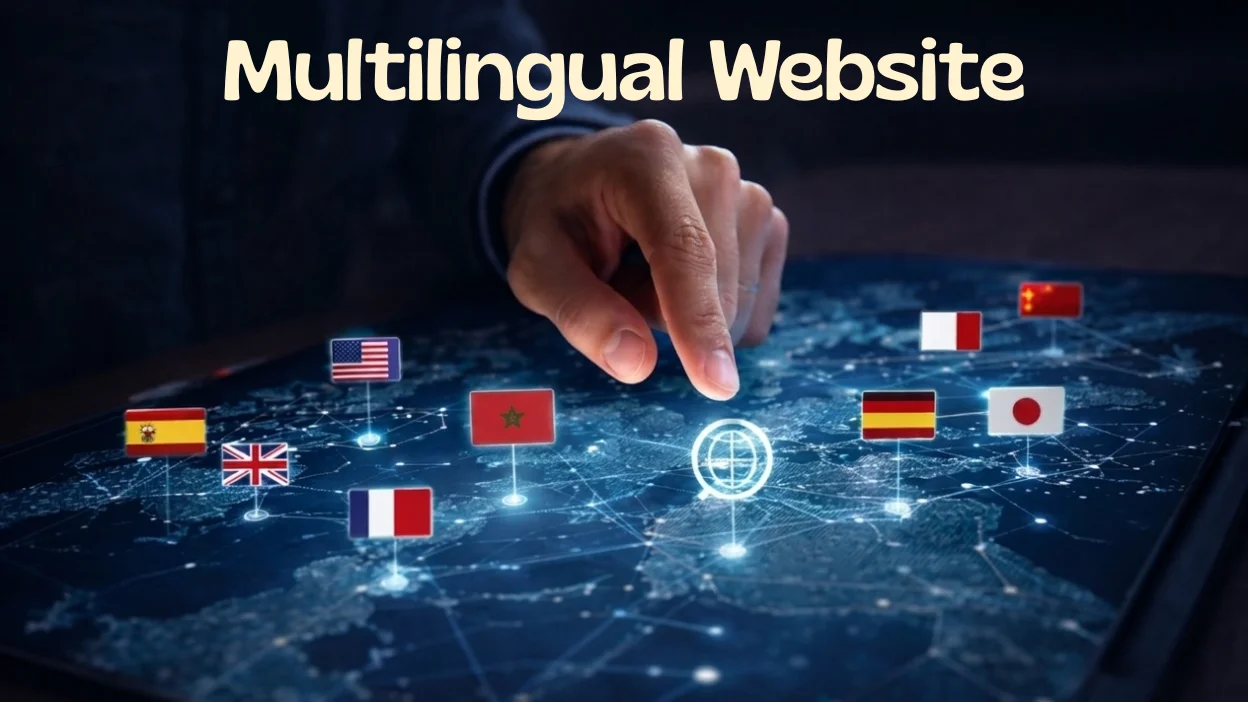
What is a multilingual website?
A multilingual website is a site that offers its content in multiple languages to reach users who speak different languages.
Unlike a multiregional site (which targets multiple countries), a multilingual site primarily focuses on the user’s language, regardless of their geographic location.
Example:
A website available in French, English, and Spanish to reach an international audience.
Why create a multilingual website?
Reach a broader international market
Improve user experience by adapting content to the user’s languageA well-designed multilingual site enhances user experience (UX) by displaying content in each visitor’s preferred language.
Increase overall organic traffic
Strengthen credibility and brand image internationallyA well-optimized multilingual site can appear in search results in different languages, with pages tailored to local queries.
Key elements of a high-performing multilingual website
High-quality translation
Translations should be natural and culturally appropriate.
Simple machine translation can harm credibility and SEO.Appropriate URL structure
Three main options:
Subdirectories → site.com/fr/ | site.com/en/
Subdomains → fr.site.com | en.site.com
Separate domains → site.fr | site.co.ukEach structure has its advantages depending on your international strategy.
Hreflang tags
Essential for telling Google which language version to display.Localized content
Adapt:
Expressions
Currency
Units of measurement
Cultural referencesGood multilingual SEO is not just about translation, but localization.
Concrete examples
International e-commerce:
French version for French-speaking users
English version for English-speaking users
Digital agency:
Blog translated into English to attract non-French-speaking clients
Common mistakes (and solutions)
Unreviewed machine translation → Poor quality → Have content reviewed by a native speaker
Missing hreflang tags → Wrong version displayed → Implement hreflang correctly
Mixing languages on the same page → Confuses Google → Clearly separate versions
Poorly managed duplicate content → Indexing issues → Properly structure URLs
Difference between a multilingual site and a multiregional site
Multilingual site → targets multiple languages
Multiregional site → targets multiple countries (possibly with the same language)
A website can be both multilingual and multiregional.
Further reading
To complement your reading on international SEO:
Frequently Asked Questions
No, only if it is well structured and properly optimized.
Subdirectories are often recommended to centralize SEO authority.
Ideally yes, especially key pages (products, services, blog).
Yes, you should localize expressions, currency, and cultural references for each country to improve user experience and SEO.
Still looking for answers? Contact our SEO experts today.
Table of contents
By submitting this form, I agree to the privacy policy.