
- Home
- Digital Marketing Glossary
- International SEO: optimizing your visibility globally
International SEO Glossary: Multilingual and Multi-Market Terms
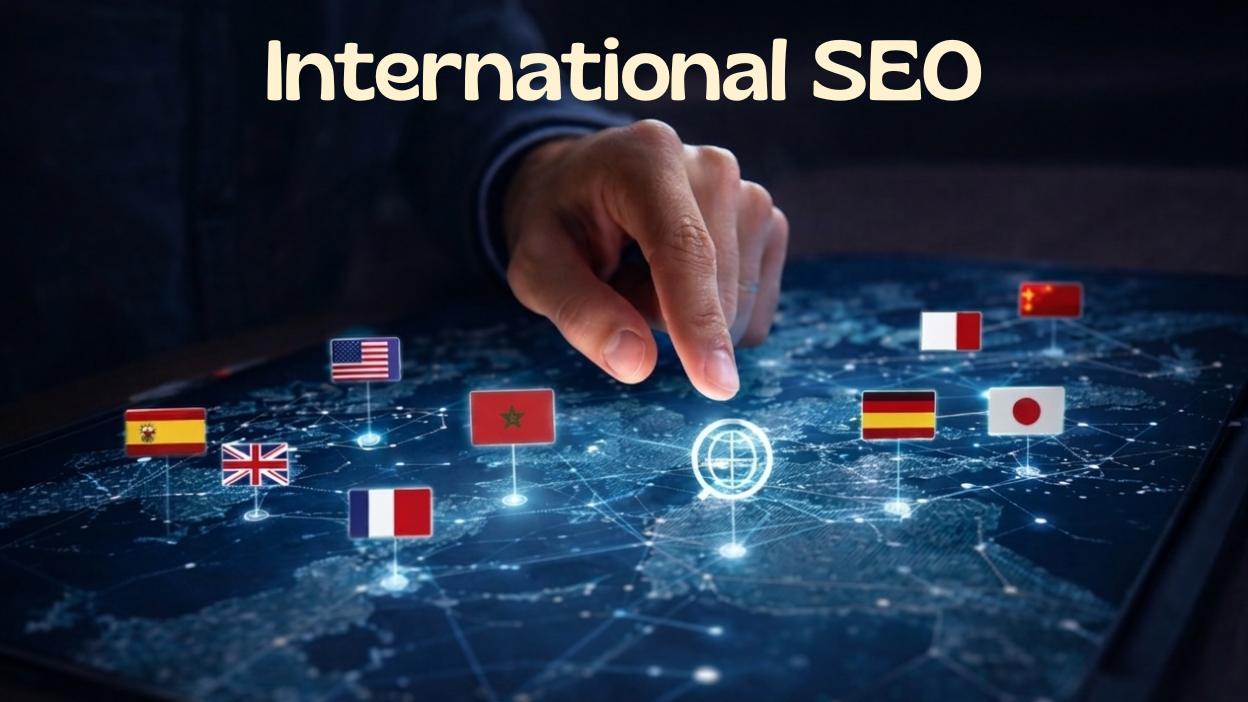
International SEO refers to the optimizations that allow a website to appear in search results across multiple countries or languages.
Unlike traditional SEO, the goal here is to adapt your content based on language, region, and local user search intent.
If you’re targeting multiple markets (France, Morocco, Canada, Belgium, etc.) or multiple languages (French, English, Spanish, etc.), an international SEO strategy becomes essential to avoid technical issues and improve overall visibility.
In this glossary, you’ll find simple definitions, concrete examples, and common mistakes to avoid.
Fundamentals of international SEO
Here are the key concepts to understand and implement an effective international SEO strategy.
hreflang tags — indicate a page’s language and region
x-default — define the default version for users who are not specifically targeted
Multilingual site — content translated into multiple languages
Multiregional site — content adapted for different countries
Language targeting — optimization based on users’ language
Where to start (3-step mini guide)
If you’re starting with international SEO, here’s a simple approach:
Define your target markets
Identify priority countries and languages.
Choose the right URL structure
Use subdirectories, subdomains, or separate domains depending on your strategy.
Properly implement hreflang tags
Further reading
To deepen your understanding of international SEO, explore the following terms:
B: hreflang tags
C: language targeting
S: multilingual site
S: multiregional site
X: x-default
Frequently Asked Questions About E-commerce SEO
A multilingual site targets multiple languages.
A multiregional site targets multiple countries, even if the language is the same.
They are not mandatory, but they are strongly recommended to avoid duplicate content issues.
Yes, through a proper site structure and correct hreflang configuration.
No. Any business targeting multiple countries or languages can benefit from it.
Still looking for answers? Contact our SEO experts today.
Table of Contents
By submitting this form, I agree to the privacy policy.